Why York?
People often ask why I chose York. York psychological noir works because it offers something few cities can: a beautiful surface with plenty of shadows underneath.
It’s a fair question. There are bigger cities, louder ones, places that advertise their drama. York, at first glance, seems almost too perfect – medieval streets, ancient walls, cafés spilling onto cobbles. The kind of place that ends up on postcards.
But postcards only show what chooses to be seen.
Why York Works for Psychological Noir
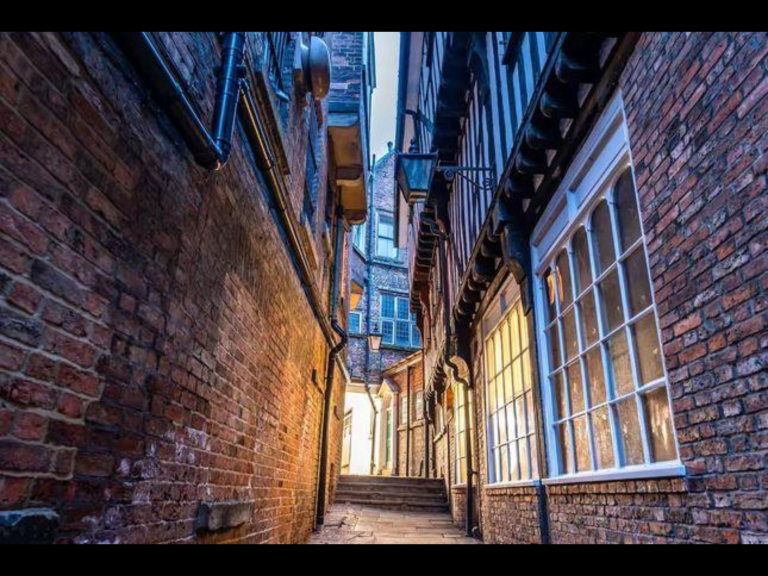
The York that matters to me lives just beneath that polished surface. It lingers in the snickelways – Lady Row, Coffee Yard, those narrow passages you find once and then spend years trying to locate again – where footsteps echo long after the city has gone quiet. These hidden York locations shape the atmosphere of every story I write.
It waits in the reading rooms of the Minster Library, unchanged for a century, where forgotten letters sit inside boxes no one has opened in decades. It breathes in buildings that have reinvented themselves so many times their walls seem to remember more than the people passing through them. King’s Manor has been a monastery guest house, a royal residence, a Georgian assize court, and now a place where academics like, my lead character, Louise argue about marginalia over rapidly cooling coffee.
Walk the snickelways at dusk and you’ll feel it – that pressure of centuries, that sense of a city keeping half its business to itself. Stand beneath Bootham Bar as the light fades and you’ll understand why so many of Louise Greenwood’s better and worse decisions begin exactly there.
For Louise, a lecturer in English literature, York is more than a backdrop. Literature has always been fascinated by hidden truths – stories beneath stories, meanings beneath meanings. York understands that instinct better than most places. Every century has left something behind. Sometimes it’s an artefact. Sometimes it’s a secret. Occasionally, it’s both.
Ask anyone who has spent a quiet afternoon in the Treasurer’s House and been told, quite casually, about the Roman soldiers still said to march through the cellar. York doesn’t draw a firm line between past and present. Neither, really, does Louise.
This is why my mystery novels set in York could never happen anywhere else. They aren’t simply set in the city – they grow out of it. My York crime fiction depends on the layers, the secrets, the scandal, the quiet corners that York carries so effortlessly.
In the Louise Greenwood series, York becomes a character in its own right – a place that shapes choices, reveals some truths, and hides others.
Perhaps that’s why I returned to York, both in life and in fiction. Not because York wears its history loudly, but because it doesn’t. The city carries its secrets quietly. It never demands your attention. But if you offer it, it rarely disappoints.
Louise Greenwood understands that.
I hope, in time, you will too.