The Books We Read Twice
Most books are read once.
You enjoy them, close the cover, and move on.
Some books we read twice.
The rare ones do something stranger.
They make you mistrust your own memory.
You reach the final page and realise that the story you’ve been telling yourself isn’t quite the story you were reading at all.
The clues were there.
You simply didn’t see them.
So you begin again.
The second reading is always a darker experience.
Not because the ending has changed.
Because you have.
Now you know who was lying.
Now you know what mattered.
Now you know which seemingly innocent conversation concealed a threat, which passing remark was really a confession, and which character earned your trust a little too easily.
The first time through, you follow the plot.
The second time through, you see the manipulation.
You see the author quietly steering your attention away from the things that mattered most.
That, for me, is the mark of a truly satisfying mystery.
Not a shocking twist that appears from nowhere.
A truth that was staring you in the face all along.
The best mysteries don’t hide their secrets.
They hide them in plain sight.
And when the revelation finally arrives, the feeling isn’t outrage.
It’s recognition.
A sudden, uncomfortable understanding that everything was there from the beginning and you willingly looked elsewhere.
Perhaps that’s why those stories linger. Long after we’ve forgotten the finer details, we remember the moment the pieces clicked into place. The moment we realised we had been fooled. And, if the author has done their job properly, the moment we discovered we rather enjoyed being fooled.
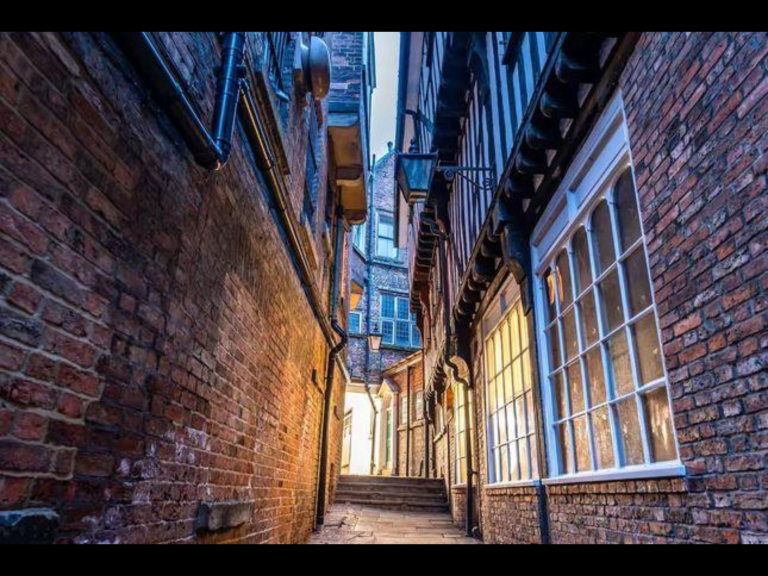
Those are the stories I return to most often. They’re also the ones I try to write: books where nothing is quite what it looks like, and York’s cobbled backstreets hide as many secrets as the people walking them.
The Louise Greenwood mysteries are built the same way – clues left in plain sight, a character who earns your trust a little too easily. Beneath Skeldergate Bridge, the first in the series, closes with a reveal built for exactly that kind of double take: the sort of ending that sends you straight back to chapter one to see how you missed it.
Which book made you turn back to the first chapter just to see how the author got away with it?