Why York Never Gives Up Its Secrets
Most cities eventually surrender themselves to you.
Live there long enough and their streets become familiar, their buildings ordinary, their history little more than a collection of dates and plaques. York is different. It has an unsettling habit of reminding you that the past is never quite finished.
Walk along the city walls at first light and you begin to understand why. Roman foundations lie beneath medieval stone. Georgian houses stand beside Viking streets. Every generation has left its mark without quite erasing the one before. The result is a city that feels layered rather than linear, as though every century is still quietly occupying the same ground.
Perhaps that is why York lends itself so naturally to crime fiction.
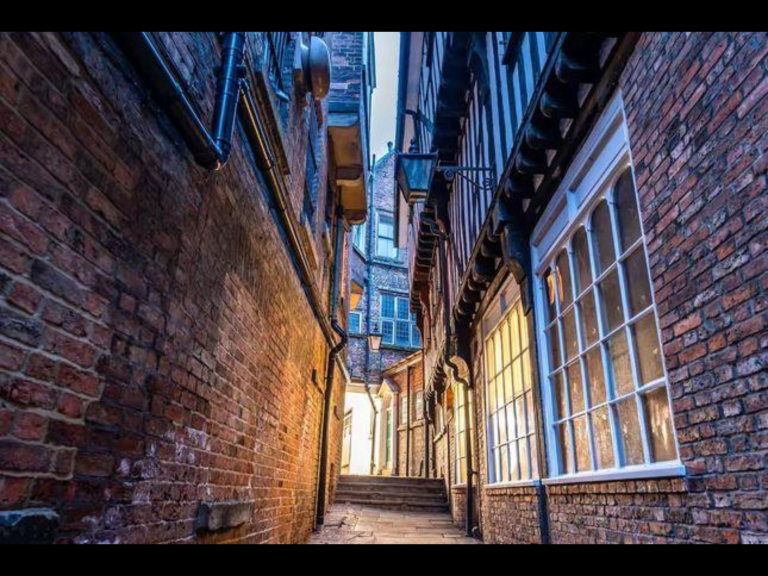
The most compelling mysteries are rarely about puzzles alone. They are about people, memory and the things we choose to hide. In York, those themes seem almost woven into the streets themselves. A narrow snickelway that appears to lead nowhere. An old doorway that has outlived every family who once crossed its threshold. A forgotten inscription glimpsed above a shop front. Small details, easily overlooked, yet somehow refusing to disappear.
As a lecturer in English Literature, I’ve always been fascinated by the way stories leave traces behind. Arthur Conan Doyle understood that observation is less about seeing everything than recognising which details matter. York rewards that kind of attention. It invites you to look twice.
That spirit lies at the heart of the Louise Greenwood mysteries. The crimes themselves may be fictional, but the city is very real. Its streets, colleges, libraries and hidden corners are more than scenery; they shape the people who move through them and the choices they make.
Readers sometimes ask whether a particular alley, bridge or courtyard really exists. Usually the answer is yes, although fiction has a habit of rearranging reality. The places are authentic, but the stories they inspire belong to the imagination.
Perhaps that is why I keep returning to York. However familiar it becomes, there is always another quiet corner to discover, another forgotten detail to notice, another story waiting patiently beneath the surface.
Cities, like people, reveal themselves slowly.
York simply asks us to look a little more carefully.